


Hero Flying City Simulator
4.61.00 Reviews
App Specs
- Version
- 1.0.7
- Updated On
- License
- Free
- Downloads
- 1,000,000+
- Developer
- BROWNE CURTIS HENRY
- Categories
- Action
- Platform
- Android
Screenshots
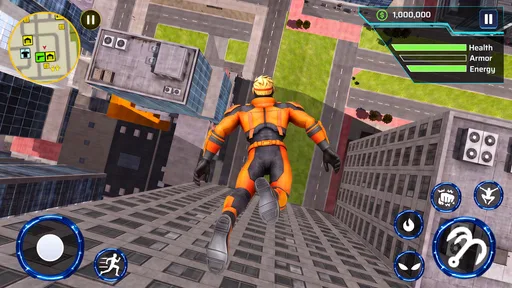
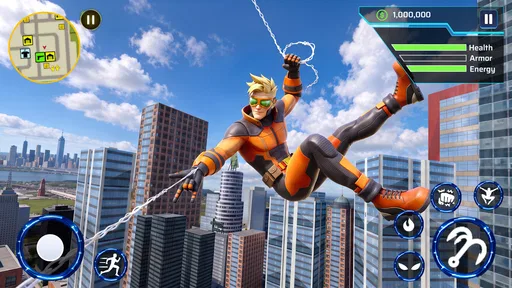
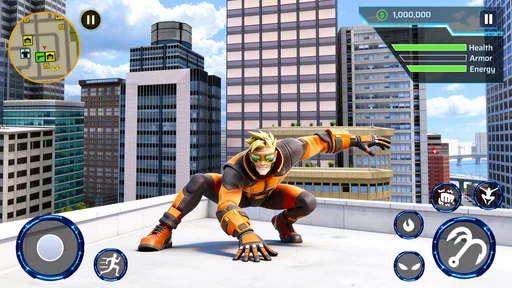
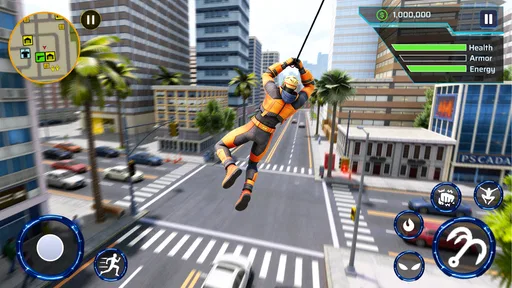
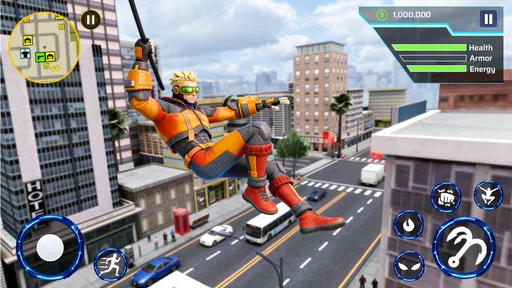
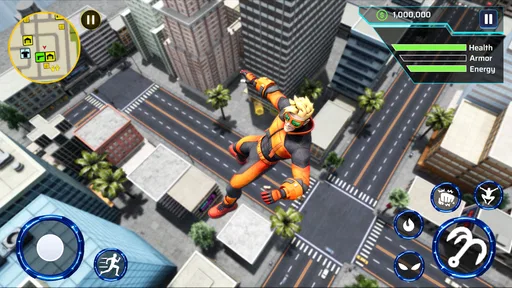
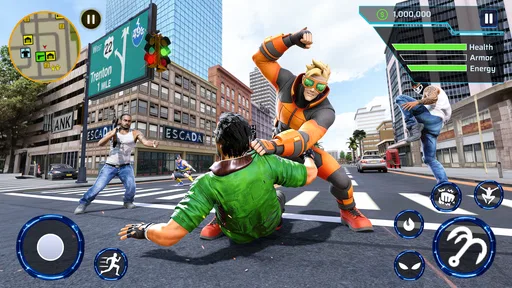
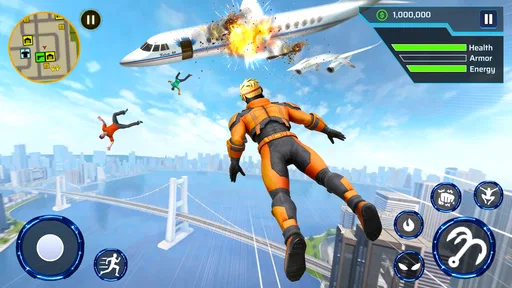
 Analysis by AppCompare
I came to Hero Flying City Simulator expecting the simple pleasure of taking off and seeing how far I could get above the rooftops. What gives it a clearer identity is the way movement and city-based missions belong together: flying is not just a way to admire the skyline, but the main tool for getting around and responding to trouble. That makes it an easy game to pick up when I want a short action session, though its appeal depends on whether I enjoy learning a flight-oriented control scheme rather than relying on familiar running and fighting mechanics.
As a free action game from BROWNE CURTIS HENRY, it has attracted over a million installs and holds an average rating of 4.6 from around 666 ratings. It is rated for Everyone, and its current version is 1.0.7. Those figures offer a useful snapshot of its audience, but they do not tell me whether its particular style will suit you. I would approach it as a light superhero flight experience: best for players drawn to moving through a city and tackling missions, not for someone expecting a deep combat game or a detailed simulation of real flying.
A city built around movement
The strongest idea here is the relationship between the hero and the setting. A city gives flight a practical purpose: buildings become landmarks, streets sit far below, and getting from one point to another is part of the activity rather than a pause between levels. The store’s brief description points to rope-swinging, crossing the city, and completing missions. That combination suggests a more hands-on urban rhythm than a game focused only on open-ended flight.
For me, the useful way to approach a new mission is to treat the journey as part of the challenge. I would first get a feel for how the hero gains and keeps momentum, then use the surroundings as visual reference points instead of trying to rush straight toward a distant marker. That small change in attitude matters in a movement game: the city is not only scenery, but the space you need to read while staying in control. It is also why this can feel different from a standard action game in which a map simply connects one combat arena to the next.
Learning the feel of the controls
Rope-based movement and flying can sound instantly intuitive, but they ask for a little patience on a touchscreen. Aiming a swing, judging when to release, and correcting direction are different skills from steering a character along the ground. My advice is to spend the opening minutes experimenting rather than treating every imperfect turn as a failure. If a movement feels awkward, slow down and notice what the control is doing before chaining several actions together.
This also shapes who is likely to enjoy the game. If you like games where movement itself is satisfying to improve, the learning curve can become part of the reward. If you want immediate, precise combat with minimal adjustment, the same early experimentation may feel like friction. A larger screen can make distant city features easier to follow, while shorter play sessions are sensible until the control response feels familiar. I would also avoid judging the game from a single rushed attempt; a movement system can feel very different once your hands learn its timing.
Mission pacing and everyday play
The mission focus gives the flying a reason to keep moving, but it also means this is not necessarily the right choice when I want a quiet, uninterrupted sightseeing experience. Someone who opens a game during a short break may appreciate having a clear task to pursue, while a player looking for a long narrative campaign should be cautious about expecting that kind of structure. The central appeal is the immediate loop of moving through the city and responding to objectives.
Worth Reading Before You Choose

EA SPORTS FC Mobile 26 Is a Bigger Football Game, but It Takes Time

Flipboard Shows What News Apps Must Do Beyond the Feed

Switching to Android Auto Means Rethinking Your Driving Routine

Google Calendar Makes a Crowded Week Easier to Manage

Ludo King Makes the Most of the Minutes Between Plans

Baby Panda World Brings Quick Play to Modern Phones, but Its Game Library Feels Busy
A realistic way I would fit it into a day is to play a little while waiting for a meal or during a commute break, ideally somewhere I can give the screen my attention. I would use that time to practise one part of movement—such as approaching a target cleanly—instead of trying to master everything at once. This makes the controls less frustrating and gives each brief session a purpose. It is a better match for short bursts of active play than for someone who wants a passive game that can be played without looking closely.
How it sits beside other action games
Compared with a conventional mobile brawler, the hook here is getting around rather than simply closing distance and attacking. Compared with a broad open-world superhero game, its promise is more focused: city traversal and missions are the main draw, rather than a sprawling role-playing system. That narrower identity is a strength when I want a quick dose of superhero movement, but it is a trade-off for players who want extensive character development, complex combat, or a story-led campaign.
It is worth being clear about that distinction before downloading. A player who enjoys learning routes and movement timing is likely to get more from it than someone who measures an action game by the range of weapons or combo options. Likewise, someone seeking a realistic flight simulator should choose a game built around aircraft handling instead; superhero movement is about a heightened city adventure, not authentic aviation. The right comparison is not “does it do everything?” but “do I want to spend my playtime moving through an urban setting on a hero’s terms?”
Making the most of the city
I find it helps to treat each trip across the city as a chance to learn one small thing, rather than trying to perfect every move at once. Pick a visible landmark, keep your approach controlled, and notice which adjustments make the journey feel smoother; that gives the next mission a clearer starting point. From there, it’s easier to decide whether this movement-focused style is the part you want to keep coming back for.
Small habits that help
One non-obvious tip is to separate navigation practice from mission pressure. When a task begins, it can be tempting to rush toward the destination immediately. I would instead use the first stretch to notice how the hero responds to turns and changes in direction, then make a more deliberate approach once the target is closer. Even without treating the city like a puzzle, keeping landmarks in view can help prevent frantic corrections and make movement feel more intentional.
Another useful trade-off is choosing control over speed. A fast approach may feel exciting, but if I arrive at an objective without a clear sense of direction, the final manoeuvre can become the messiest part. A steadier route can be more satisfying because it lets me focus on the task rather than recovering from a missed turn. That is especially helpful for newcomers who are still deciding whether the game’s movement is for them.
The game is also a better fit for an attentive play setting than for distracted multitasking. If I am walking, talking, or glancing away repeatedly, a movement-focused game gives me little room to play on autopilot. I would save it for a seated break and keep the first session short enough to learn the basic feel without turning practice into a chore. That is a practical distinction from simple idle or match-based games, where a quick glance may be enough to keep up.
Who should give it a try
I would recommend it to players who like superhero themes, urban settings, and the satisfaction of getting better at movement. It may also suit someone who has already tired of action games built around repeated close-range encounters and wants traversal to be the central activity. The free entry point makes it easy to try, and the Everyone age rating makes its stated audience broad, though a parent should still decide whether the game’s action theme suits a particular child.
I would skip it if my priority were a substantial plot, deep tactical combat, realistic flight, or a game that feels polished to me from the very first touch. The learning curve is not automatically a flaw, but it is a real part of the experience. If you dislike experimenting with directional controls, a straightforward platform fighter or a more conventional action title will probably feel more comfortable. If you are curious about the movement, though, giving it a patient first session is a fair test.
What to expect before installing
Hero Flying City Simulator was released on May 18, 2026, and it requires Android 7.0 or later. Before installing, I would check that the device meets that requirement and that I have enough uninterrupted attention for a brief learning period. The game is free, which lowers the barrier to trying it, but I would still decide based on its central activity rather than assuming the price means it will match every kind of action-game taste.
The practical question is whether the city traversal stays enjoyable once the novelty of taking off wears off. The best way to answer that is to focus on how the controls feel after a few attempts and whether mission goals give your movement enough purpose. If the travel itself is the part you enjoy, the missions provide a framework for more of it. If you only want a sequence of fights, that framework may not be enough to hold your interest.
Atmosphere with a clear purpose
Hero Flying City Simulator is most appealing when I think of it as an action game about getting across a city, not as a promise of every superhero-game feature at once. Its rope-swinging and flight give the setting a playable purpose, while missions keep movement pointed toward a goal. I would recommend trying it if that combination sounds fun and you are willing to learn its rhythm; I would choose a different game if story depth, intricate combat, or realistic piloting matters more.
My final advice is simple: approach the first session as practice, pay attention to how the hero moves, and judge the game by whether travelling through the city feels rewarding to you. For the right player, that focused loop can make a short break feel lively. For someone who wants a more traditional action campaign, it is better to know the difference before downloading.
First Impressions and Gameplay
From the moment I launched Hero Flying City Simulator, I was greeted by vibrant graphics and an engaging soundtrack that immediately pulled me into its world. The game starts with a quick tutorial that guides you through the basic controls. And trust me, you'll want to pay attention here because mastering flight isn't as easy as it looks! But once you get the hang of it, flying becomes a breeze.
The city is your playground, and it’s beautifully detailed with skyscrapers, parks, and bustling streets. Your main mission is to complete various tasks, ranging from rescuing civilians to thwarting criminal activities. It’s a mix of strategy and action that keeps you on your toes.
Graphics and Visuals
One of the standout features of this app is its graphics. The developers have done a fantastic job of creating a realistic cityscape that makes you feel like you’re really there. The attention to detail is impressive, from the reflections on glass buildings to the dynamic weather system that adds an extra layer of immersion. Flying through the city during a sunset? It’s a sight to behold.
Controls and User Experience
Now, let’s talk about the controls. At first, the flying mechanics can feel a bit tricky, but with a little practice, you’ll be zipping around like a pro. The game uses a combination of touch and tilt controls, which might take some getting used to, but it’s definitely worth it for the level of control you gain over your superhero’s flight.
On the user experience side, the interface is clean and intuitive. Everything is laid out in a way that makes sense, so you’re not fumbling around trying to figure out what to do next. The missions are clearly outlined, and there’s a handy map to help you navigate the city.
Mission Variety and Challenges
The missions in Hero Flying City Simulator offer a good mix of challenges. Some require quick reflexes and strategic thinking, while others are more about exploration and discovery. Whether you’re saving someone from a burning building or stopping a bank heist, each mission feels unique and rewarding.
One thing to note is that the difficulty ramps up as you progress. This keeps things interesting, as you’ll need to continuously hone your skills to tackle more complex challenges.
Replayability and Longevity
A game like this needs to have replay value, and thankfully, it does. With a plethora of missions to choose from and various ways to approach each task, there’s always something new to try. Plus, with regular updates and new content being added, the game stays fresh and engaging.
If you’re someone who loves completing achievements, there’s plenty to keep you busy here. From unlocking new superhero costumes to earning medals for mission performance, there are lots of goals to strive for.
Final Thoughts
In a world filled with endless mobile games, Hero Flying City Simulator stands out as a well-crafted experience that offers both excitement and challenge. Whether you’re a casual gamer or a hardcore superhero fan, there’s something here for everyone. The combination of stunning graphics, engaging missions, and immersive gameplay makes it a must-try.
So, if you’re ready to don your cape and become the hero your city needs, give this game a download and start your adventure today. Who knows? You might just find your new favorite pastime!
Pros
- Realistic city environment with detailed graphics.
- Intuitive controls for easy navigation and gameplay.
- Wide variety of missions to keep players engaged.
- Customizable hero abilities for personalized gameplay.
- Smooth performance without noticeable lags.
Cons
- Limited storyline depth compared to other simulators.
- In-app purchases can be quite costly.
- Repetitive missions may reduce long-term appeal.
- Requires a stable internet connection to play.
- Ads can be intrusive during gameplay sessions.
FAQs for Hero Flying City Simulator
What is Hero Flying City Simulator about?
Hero Flying City Simulator is an action-packed game that allows players to take on the role of a superhero navigating through a sprawling urban landscape. Players can fly around the city, tackle missions, and fight against crime, all while enjoying stunning graphics and an immersive gameplay experience.
What platforms is Hero Flying City Simulator available on?
Hero Flying City Simulator is available for download on both Android and iOS devices. Users can find the game on the Google Play Store and the Apple App Store, making it accessible to a wide range of mobile users. Ensure your device meets the app's requirements for optimal performance.
Does Hero Flying City Simulator require an internet connection?
While Hero Flying City Simulator can be played offline, certain features may require an internet connection, such as updates, leaderboards, and social sharing options. For the best experience and to access all features, it is recommended to have a stable internet connection.
Are there in-app purchases in Hero Flying City Simulator?
Yes, Hero Flying City Simulator includes in-app purchases. Players can buy various items, power-ups, and cosmetics that enhance gameplay. While these purchases can enhance the experience, they are optional and not required to enjoy the core features of the game.
Is Hero Flying City Simulator suitable for all ages?
Hero Flying City Simulator is designed for a wide audience but may contain mild violence and action scenes typical of superhero games. It is advisable for parents to review the game’s content and rating to determine if it is appropriate for younger players.


